

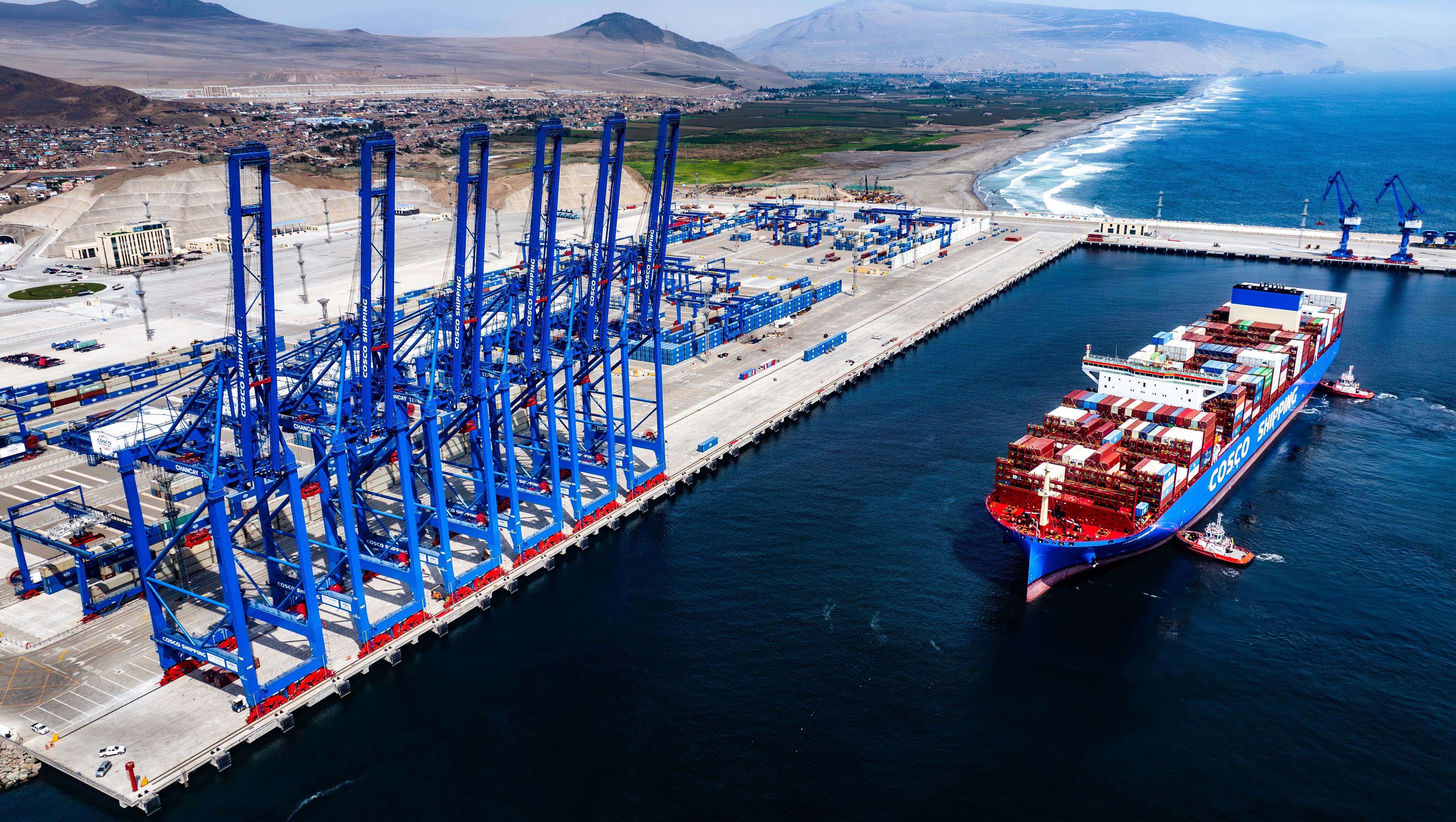





Geopolitical competition between the U.S. and China for influence in South America has ramped up significantly over the past decade. China has overtaken the U.S. as the largest trading partner in many South American countries, including Peru. Strategically located on the Pacific coast, Peru is seen by China as its “Gateway to South America” and is planned to become Beijing’s trade and logistical hub in the region. Peru is strategically important to both China and the U.S. due to its pivotal location and abundant supply of critical minerals essential to sustaining economic development in the 21st century. However, by cutting foreign aid, the U.S. has undermined its historically strong relationship with Peru. This will weaken the U.S.-Peru strategic economic partnership and open new opportunities for China to expand its influence, effectively eroding U.S. soft power in the Western Hemisphere. It is crucial for the U.S. to make strategic investments in Peru to counter China’s growing presence and mitigate potential threats to U.S. business interests from Beijing’s expanding economic influence in the region.
China’s Strategic Expansion in Peru
Even before U.S foreign aid was cut, China had been making significant inroads in Peru. In 2019, Peru joined China’s Belt and Road Initiative (BRI), a key part of China’s effort to expand its soft power and influence across the Global South through infrastructure projects. Peru has become home to China’s largest investment in the Western Hemisphere: the Chancay mega-port, which will facilitate faster trade between China and South America. This port, operating from “Shanghai to Chancay,” will help China to expand its leverage in the region by increasing South American countries' economic dependence on China. Officials in Washington have expressed security concerns about China’s 60% stake in the port and exclusive control for the next 30 years.
China desires to control as many ports around the world as possible, as this allows it to set shipping fees and other customs policies, gaining economic leverage over other countries. China’s control of strategic ports could also be used to disrupt the supply chains of American companies if tensions between Washington and Beijing were to further escalate. To pressure the United States, China could restrict American companies' use of its ports, causing significant logistical disruptions and higher costs for American consumers. The Chinese presence at this port could also be used to collect intelligence on U.S. military movements in the region and to prevent the U.S. military from using commercial shipping lines to transport crucial resources in the event of a significant conflict.
The U.S. currently has an opportunity to invest in another port, much larger than the one in Chancay, in southern Peru. The new port would enable larger ships to dock and be situated closer to the Southern Interoceanic Highway, which connects Peru, Bolivia, and Brazil, thereby reducing China’s economic influence in the region. China has also increasingly gained control of other critical parts of Peru’s infrastructure, such as Lima’s electrical supply and telecommunications. Control over key parts of Peru’s infrastructure gives Beijing significant leverage over Lima, which it can use against U.S. business interests, and that increases the risk that its infrastructure will be used for espionage against the United States. There is currently an opening for the U.S. to invest in Peru’s telecommunications industry as the country adopts 5G technology. This targeted investment would limit Beijing’s control over Peru’s telecommunications infrastructure and reduce the risk that it could be used to spy on Americans. Moreover, Beijing is also seeking to consolidate its control over the world’s supply of critical minerals by increasing investments in mining industries worldwide, including Peru’s copper mines. China's dominance of Peru's essential minerals poses a national security threat to the United States, which relies on these resources to fuel emerging technologies and promote economic growth. At the same time that Lima’s financial dependence on Beijing has been growing, the Trump Administration has cut strategic investments into Peru, weakening U.S. influence and compromising U.S. national security.
U.S. Foreign Aid Withdrawal Opens Doors for China
USAID allocated approximately $135 million to Peru in 2024, focusing on programs in “food security, anti-narcotics operations, job creation, environmental protection, public health, and democracy-building.” The shuttering of USAID will result in severe cuts for NGOs in Peru that handle these issues. It will also hurt longstanding U.S. goals such as the eradication of coca in Peru and lead to an increase in deforestation, drug trafficking, and illegal mining. These cuts create openings that China can now fill. While China’s BRI has primarily focused on infrastructure projects by providing loans, there are signs that China is increasingly willing to fill the foreign aid gaps left by the West. As Washington’s diplomatic engagement in Africa over the past decade has declined and U.S. foreign aid has plateaued, Beijing has stepped in to fill the void.
In September 2024, Xi Jinping committed over $10 billion in investments by Chinese companies, a move likely to increase China’s influence in the region and further erode Western influence. This suggests that China may also be willing to step up in other strategic locations, such as Peru, to capitalize on the soft-power vacuum left by the United States. Unlike U.S. assistance, China’s aid is unlikely to include transparency and human rights conditions.
A multi-country analysis of African countries receiving foreign aid from China found an increase in corruption near active Chinese project sites. This is because China’s unconditional aid approach makes funds more vulnerable to exploitation. If China is allowed to fill the aid vacuum left by USAID in the Western Hemisphere, it could lead to increased corruption and regional instability, creating new threats for the U.S. in its own neighborhood.
Countering China Through Strategic Investment
The U.S. should maintain its soft power in resource-rich nations, such as Peru, by making strategic investments to counter growing competition from China. USAID was a valuable political tool that furthered U.S. interests and helped to secure the critical minerals required to compete in the 21st century. The cutting of international assistance programs will cause the U.S. to lose the leverage it could have used to address rising security concerns abroad, making renewed investments more urgent.
There is still time for the U.S. to make targeted investments in Peru and stave off Chinese influence. As of 2023, China’s investments in Peru only accounted for 4% of Peru’s total FDI. It is essential to invest in high-profile projects that enhance key infrastructure, such as ports, telecommunications networks, and critical-mineral mining projects. These investments would align with the Trump administration’s foreign policy goal of making America safer, stronger, and more prosperous. Without significant U.S. investment, Peru’s critical industries will be dominated by Chinese companies, thereby increasing the risk that China will use its influence to undermine American businesses and U.S. national security.
Peru is China’s gateway to the region and a litmus test for the U.S.'s ability to compete with China’s regional expansion. Without renewed investment, the U.S. will continue to cede influence to China in Peru and throughout the Western Hemisphere, harming U.S. interests and its ability to compete as a global power in the 21st century.
The views expressed in this piece are those of the author and do not necessarily represent the position of the Alliance 4 American Leadership (A4AL) alone. Alliance 4 American Leadership would like to acknowledge the many generous supporters who make our work possible.



Stay Updated
Become a member to learn about our impact, events, and how to get involved.