



Kenya’s debt crisis has evolved from an economic problem into a democratic emergency. With public debt climbing toward 70 percent of GDP, Kenya’s leaders now govern between creditors and citizens. The burden is no longer just fiscal—it is moral. Every new tax, subsidy cut, or fuel hike reinforces the perception that government serves debt before it serves people.
President William Ruto’s “hustler-nation” agenda once promised to uplift working Kenyans. Instead, his austerity measures—removing fuel and flour subsidies, raising taxes, and enforcing a controversial housing levy—have triggered mass protests and a violent crackdown. As daily life grows harder, citizens see a government detached from their reality. When political promises collapse under the weight of fiscal mismanagement, so too does democratic faith.
This erosion of trust did not begin with Ruto. Reckless borrowing during the Kenyatta administration—especially opaque infrastructure loans from Chinese lenders—saddled Kenya with liabilities that produced little growth. The $5.3 billion Standard Gauge Railway stands as a symbol of fiscal overreach and weak oversight: half-empty trains, unpaid debts, and few measurable returns. China Eximbank extended a buyer’s credit loan of approximately $2 billion for Phase 1 and $1.39 billion for Phase 2A of the project, making it Kenya’s single most significant infrastructure debt. Corruption siphoned billions while the judiciary often deferred to executive power, allowing unconstitutional borrowing to persist.
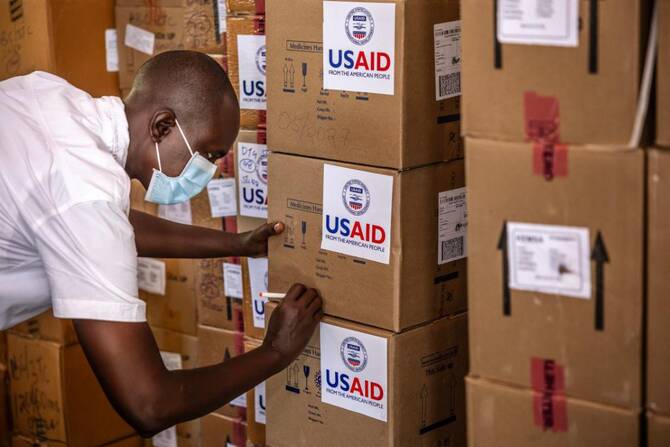
Unlike Western development assistance, which generally includes governance safeguards and performance-based conditions, Chinese loans often lack transparency and oversight. This asymmetry has deepened Kenya’s fiscal dependence while enriching political elites. In contrast, under its 2020-2025 Country Development Strategy, USAID committed approximately $2.5 billion over five years — an average of about $470 million annually — to programs in health education and governance—a more sustainable approach that reinforces long-term governance rather than short-term debt accumulation. In FY 2023 alone, the United States committed roughly $846.9 million in assistance to Kenya. The result is a governance vacuum in which institutions appear complicit and citizens are abandoned. It is no surprise that the 2022 election recorded the lowest voter turnout in fifteen years.
Why This is More Than Economics
Kenya’s fiscal crisis is not just about solvency—it is about the survival of public trust. When economic stability erodes legitimacy, democratic norms weaken first. In this sense, Kenya’s experience mirrors a broader challenge across the Global South: heavy indebtedness can quietly hollow out democratic accountability before default occurs. During 2022-2023, Kenya’s debt servicing on Chinese Standard Gauge Railways ( SGR) loans alone approached $800 million—nearly the cost of its entire annual health budget. The contrast between unsustainable lending and accountable aid underscores how the quality—not just the quantity—of financial assistance determines whether a country strengthens or loses its democratic foundations. This distinction highlights why the quality of aid — not merely its quantity — determines whether it supports governance or deepens dependency. As Kenya moves away from IMF programs and seeks new terms with the World Bank, Western development assistance can serve as a stabilizing complement—reinforcing governance standards even as fiscal conditionalities loosen. These shifts underscore the need for aid that reinforces institutional accountability rather than deepening fiscal dependency.
How Smarter Foreign Aid Can Help
Foreign aid still matters—not as a charity, but as a stabilizing force for governance itself. Properly targeted assistance can act as a democratic buffer when fiscal collapse threatens civic trust. Three priorities stand out:
Protect core public services. Aid directed toward health, education, and food security prevents austerity from turning fiscal pain into a humanitarian crisis.
Reinforce transparency. Donor programs can fund independent monitoring of debt contracts, budget execution, and anti-corruption enforcement. Public disclosure and oversight mechanisms help citizens see where money flows.
Support institutional integrity. Technical and budgetary assistance to Kenya’s Parliament, Auditor-General, and Ethics and Anti-Corruption Commission strengthens checks and balances that domestic politics alone have failed to uphold.
Crucially, this is not an argument for indefinite dependency. It is a call to rethink aid as democratic insurance —a temporary but vital safeguard when governance systems are overburdened by debt. Donor nations also bear a moral responsibility—many of Kenya’s loans were facilitated by international creditors who ignored governance risks. Aid that restores transparency is, in part, restitution for that negligence.
A Lesson for Washington and Beyond
For the United States and its partners, Kenya offers a test of how aid can evolve beyond humanitarian relief. USAID’s historical focus on health and education is valuable but incomplete. As Washington reassesses its development priorities in Africa, it should frame U.S. assistance as a credible alternative to China’s debt-heavy model—one that rewards transparency, institutional reform, and measurable progress rather than opaque project finance. A new generation of aid programs should emphasize fiscal accountability and civic resilience, not just service delivery. Funding independent audit bodies, supporting data transparency, and empowering civil-society watchdogs are low-cost, high-impact ways to rebuild democratic trust. If austerity continues to hollow out legitimacy across developing democracies, then debt relief and aid must function not merely as economic tools, but as instruments of accountability. The actual danger is not insolvency—it is loss of faith in governance itself. Once that trust disappears, no amount of foreign investment can repurchase it. Kenya’s crisis is thus not a cautionary tale but also an opportunity — to redefine how aid, accountability, and democracy can reinforce one another in the twenty-first century.
The views expressed in this piece are those of the author and do not necessarily represent the position of the Alliance 4 American Leadership (A4AL) alone. Alliance 4 American Leadership would like to acknowledge the many generous supporters who make our work possible.




Stay Updated
Become a member to learn about our impact, events, and how to get involved.