




Introduction
While Venezuela’s next phase remains uncertain, the Trump administration has indicated a three-phase approach focused on stabilization, recovery, and transition. Within this context, the Alliance for American Leadership stresses that support for the Venezuelan people and their leadership must remain central and not forgotten.
This brief assesses the current moment as one of leadership change without structural reform, in a context of institutional erosion, humanitarian need, and persistent governance weaknesses. It clarifies the scope and proposes realistic use of U.S. leverage and also outlines a framework that prioritizes stabilization, public accountability, curbs on corruption, and humanitarian relief. It examines how development assistance, sanctions policy, and diplomatic engagement can be structured to reduce humanitarian suffering, deter further human rights abuses, counter transnational criminal and malign external influence, and protect U.S. security interests, while avoiding legitimization of unreformed power structures or open-ended commitments.
The brief adds in actionable recommendations for Congress focused on oversight, feasibility, and strategic restraint. It explores how conditional, time‑bound, and reversible tools can create space for Venezuelan-led political processes and civil society engagement, draws comparative lessons from other transitional contexts, and emphasizes aligning U.S. means with realistic objectives while preserving Venezuelan-led political resolution as the only durable path toward long-term stability.
I. The Current Moment: Leadership Change Without Structural Reform
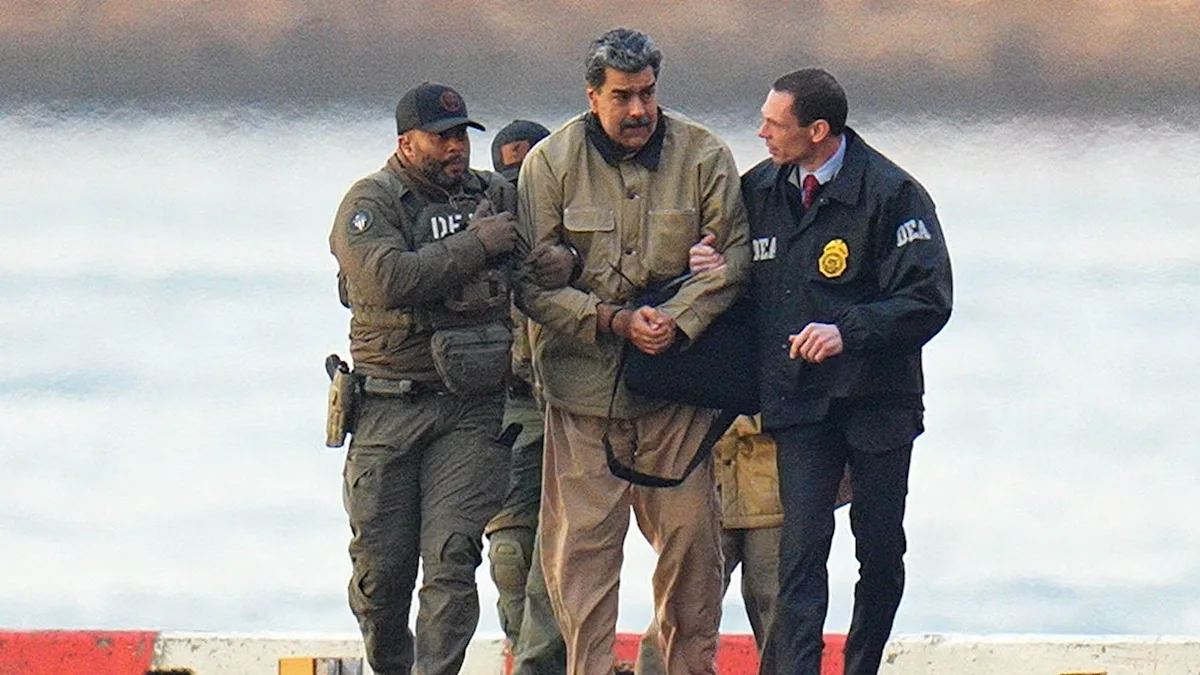
The removal of Nicolás Maduro constitutes a significant political inflection point but not a fundamental reordering of Venezuela’s governing institutions. Core state structures, including the security services, judiciary, and economic control mechanisms, remain largely unchanged. Authority continues to flow through systems built under the Chávez–Maduro period rather than reformed or independent institutions.
Enduring Power Structures and the Limits of Immediate Accountability
Regime-era actors retain control over key levers of coercion and enforcement. The armed forces and intelligence services remain key to political stability and continue to operate under legacy incentive structures. Judicial and electoral institutions do not have sufficient independence to serve as credible vehicles for accountability or political renewal. The current political leaders have not publicly expressed willingness to account for past human rights abuses or to pursue reconciliation through transitional justice or other measures.
Stabilization Without Rupture and the Risks of Policy Miscalibration
While there is no evidence that humanitarian conditions have further deteriorated following the leadership change, basic services remain fragile, poverty is widespread, and displacement pressures persist. In the wake of the current situation, uncertainty among all sectors of society has increased.
This moment should therefore be understood as a pause rather than a rupture. It presents limited space to recalibrate incentives through external engagement, but only if policy is grounded in a sober assessment of both continuity and change.
II. Clarifying U.S. Leverage and Its Limits
The U.S. retains meaningful tools to shape Venezuela’s external environment, but its ability to influence internal political outcomes should be bound. Diplomatic engagement, applications of targeted sanctions, focused development assistance, and regional coordination are appropriate next steps.
Continuing Sanctions as Leverage
Sanctions policy remains an important source of U.S. leverage. Current authorities allow for calibrated use of targeted designations, licenses, and conditional relief tied to specific behaviors. This framework supports conditional engagement while preserving the ability to respond quickly to backsliding.
Making Use of Diplomacy and Multilateral Engagement
Diplomatic and multilateral engagement can support humanitarian access and monitoring, but their effectiveness depends on cooperation from Venezuelan authorities and regional partners. Participation in dialogue or international processes should not be treated as evidence of reform; process alone does not resolve underlying governance failures.
Managing the Risks and Opportunities of Economic Engagement
Economic engagement carries both potential benefits and risks. Properly structured, it can reduce illicit activity and mitigate humanitarian harm. Poorly sequenced engagement risks entrenching unreformed institutions and normalizing governance failures without accountability.
III. A Realistic Vision for Venezuela’s Transformation
Venezuela’s political, economic, and humanitarian collapse developed over decades and cannot be easily reversed. Authoritarian entrenchment, institutional hollowing, and societal trauma have left the country without the conditions required for an swift democratic transition. A credible U.S. strategy must therefore prioritize stabilization, accountability, and the rebuilding of political and civic space before attempting to engineer formal democratic outcomes.
Near-Term Focus on Stabilization and Accountability Rather Than Rapid Democratization
The Alliance for American Leadership proposes a near-term focus on accountability and stabilization rather than rapid democratization, recognizing that meaningful democratic transitions must be Venezuelan-led and require institutional repair, civic protection, and credible enforcement of human rights norms.The Chavista regime, which has governed since 1999, engaged in political repression and denial of fundamental human rights, leading to mass migration due to political fear and economic collapse. U.S. policy should focus on support for humanitarian relief, release of political prisoners and establishing building blocks for democracy. Benchmarks should be crafted to tie aid to reductions in human rights abuses, and establish pathways toward democracy with the expectation that free and fair elections should occur within the next year.
Creating Space for Venezuelan-Led Political Processes and Civil Society Engagement
The U.S. must help create space for Venezuelan-led civil society and political processes, despite the fact that the opposition infrastructure has been severely degraded by the regime. Oil revenues as well as hyper‑targeted sanctions under the Global Magnitsky Act can be used to freeze assets. Freezing assets, however, is not the same as seizing and repurposing them, a process that can take years, as the Ukraine precedent shows. In the interim, frozen assets should be leveraged to support a UN-verified reconstruction and accountability trust fund focused on human rights and a Venezuelan-led democratic transition.
A Venezuelan Diaspora Advisory Council should be formed to inform how the U.S. can best support a Venezuelan-led democratic transition. Public dialogues on Venezuela’s next steps should be held and should include the political opposition. Washington should also pursue a regional approach, working with neighboring countries such as Colombia and Brazil to facilitate diplomatic engagement and promote democratic reforms.
Avoiding Promises or Timelines the U.S. Cannot Credibly Deliver
Within this framework, the Alliance argues against short-term timelines, overly ambitious promises, or truncated measures that attempt to cut corners in democratization. Instead, it calls for a long-term strategy with specific benchmarks to help Venezuelan opposition actors and civil society rebuild the country and lay the foundation for a credible democratic transition.
Comparative Lessons From Transformational Governance in Bangladesh
The experience of Bangladesh offers important cautionary lessons directly relevant to a potential transition in Venezuela. A popular uprising in 2024 removed a deeply corrupt head of state, but an interim government with insufficient legal authority and political legitimacy, combined with prolonged delays in national elections, undermined public confidence and dissipated early reform momentum.
For Venezuela, this underscores the central importance of transparency throughout the transition. Transitional authorities must clearly and consistently communicate timelines, mandates, and decision-making authority in order to build legitimacy, manage expectations, and sustain popular support. Absent such transparency, mistrust, misinformation, and political fragmentation are likely to grow, weakening the transition and empowering spoilers.
Timing is equally critical. In the Venezuelan context, free and fair elections should occur within one year or less to avoid a dangerous power vacuum. Prolonged transitional arrangements risk eroding legitimacy, fracturing authority, and creating openings for coercive actors. As Bangladesh demonstrates, the absence of a credible electoral horizon can entrench security forces in civilian governance, with serious consequences for civil liberties and democratic norms. In Venezuela, where the security sector has long been politicized and implicated in repression, extended reliance on unaccountable security structures during a transition would be particularly destabilizing and could undermine the democratic restoration the process is intended to achieve.
IV. Countering Malign Influence and Bolstering U.S. Security
Venezuela’s leadership change creates a narrow opening for conditional engagement but does not remove core security risks that have accumulated over a decade. Interim authorities have signaled interest in cooperating with Washington, yet U.S. leverage remains bounded and outcomes will ultimately be Venezuelan-led. U.S. objectives should therefore be defined in terms of measurable risk reduction, not political transformation.
Risks Posed by Transnational Criminal Networks and Illicit Economies
Transnational criminal networks are entrenched in Venezuela’s illicit economies and have benefited from weak governance, corruption, and permissive operating space. These networks generate revenue through trafficking, extortion, and control over border corridors and can be used for coercion and transnational repression. Disrupting these revenue streams should be a primary near-term security priority.
Illicit gold and mineral extraction in southern Venezuela is a persistent driver of violence, corruption, and cross-border criminal logistics. Illegal mining is linked to armed groups, trafficking in persons, and criminal facilitation networks that exploit weak enforcement and remote terrain. A focused approach to illicit mineral flows is therefore both a governance priority and a U.S. homeland and regional security concern.
U.S. policy should emphasize tools that function under conditions of limited trust: financial intelligence, anti–money laundering measures, and targeted sanctions against facilitators. The goal is not to “clean up” Venezuela’s economy in the abstract but to reduce the permissive environment that enables organized crime to scale and export risk into the region.
External Actors Exploiting Instability to Undermine Regional Security
External actors are poised to exploit Venezuela’s isolation and institutional weakness to build durable influence in energy, infrastructure, and security sectors. The principal risk is not ideological alignment but transactional dependence, particularly where sanctions evasion, opaque logistics, and non-transparent financing are involved. Conditional engagement should therefore be framed around verifiable behaviors and transparent mechanisms rather than aspirational commitments.
Energy remains the primary channel through which outside actors seek leverage. Recent indications that the U.S. is testing more controlled pathways for Venezuelan oil exports under supervision and licensing suggest that sanctions policy is being used as a calibrated instrument, rather than a binary on–off posture. That leverage should be used to increase transparency and reduce illicit routing, not to bankroll unaccountable institutions.
China’s long-standing economic relationship with Venezuela is driven by energy supply, creditor exposure, and strategic positioning. Public U.S. government analysis documents the scale of Chinese lending and the depth of commercial ties developed over two decades, which can translate into influence over critical infrastructure and long-term export commitments. Where feasible, U.S. alternatives should compete on transparency, reliability, and regulatory compliance, rather than attempting to “outbid” China with open-ended commitments.
Iran and Russia present a more direct security concern when cooperation extends into military-industrial collaboration and proliferation pathways. Sanctions announced in late 2025 targeting Iran–Venezuela weapons-linked activity and UAV-related collaboration underscore that these ties are active and actionable under existing authorities. This is an area where deterrence and disruption can be clearer and more effective than efforts at political engineering.
Preventing Venezuela From Becoming a Long-Term Node of Malign Influence
The U.S. should define “success” as preventing Venezuela from functioning as a durable logistics and finance node for illicit networks and sanctioned state partners. That requires reducing permissive space for sanctions evasion and shadow shipping, illicit resource extraction and laundering, and military-industrial collaboration that increases risk to the Caribbean basin. Recent enforcement actions against illicit oil transport illustrate a shift toward tighter control of high-risk trade channels.
A practical approach is to pair conditional economic channels with security guardrails: transparency requirements, escrow or controlled payment mechanisms where relevant, and rapid snapback triggers tied to specific indicators. The legal and policy scaffolding for Venezuela-related sanctions and licensing already exists and can be adjusted without granting broad legitimization. This allows the U.S. to test cooperation while preserving bounded leverage.
Regionally, the U.S. should emphasize partner capacity and information-sharing over direct reconstruction commitments. Support to neighboring states for border security, maritime domain awareness, and financial investigations can reduce spillover even if Venezuelan institutional reform stalls. This posture is consistent with strategic restraint: lowering risk to the U.S. and partners without assuming responsibility for rebuilding Venezuela’s political system.
Finally, messaging to Congress should remain disciplined: conditional engagement is a tool, not an endorsement; bounded U.S. leverage reflects structural realities, not a lack of ambition; and Venezuelan-led processes are the only sustainable basis for political stabilization.
V. Aid Without Legitimization: Guardrails, Benchmarks, and Timelines
Venezuela’s fragile humanitarian conditions, deeply eroded institutions, and entrenched corruption highlight that foreign assistance is neither neutral nor risk-free. External support will be necessary to alleviate suffering and support stabilization, but the design and delivery of assistance will shape political incentives, institutional behavior, and long-term recovery prospects. Poorly sequenced or weakly conditioned aid risks reinforcing unreformed power structures, distorting accountability, and normalizing governance failures at a moment when leverage is limited but consequential.
Risks of Assistance Empowering Unreformed Power Structures
While the Trump administration has not clarified if, when, or how it intends to provide foreign assistance to Venezuela, any aid must be carefully measured and deliberately sequenced. Assistance that is poorly designed or prematurely deployed risks empowering unreformed power centers or individuals who may obstruct, rather than facilitate, recovery. U.S. support should instead prioritize community-based development, the cultivation of democratic norms, and the reform of core institutions and public services necessary for Venezuela to function effectively and sustainably. This should be complemented by support for responsible private-sector development and verified mechanisms to ensure that Venezuela’s natural resource wealth is transparently reinvested for the benefit of its population.
Benchmarks, Timelines, and Sequencing to Avoid Normalization
To avoid overdependence on external assistance, aid must be governed by clear benchmarks, timelines, and sequencing to prevent normalization or open-ended reliance. Political transitions are resource-intensive and unfold over time, which is why aid should be used strategically as leverage rather than treated as an entitlement. When properly designed, assistance can function as both an incentive and a constraint, provided it is tailored to reflect developments on the ground, define the duration of support, clarify desired outcomes, and specify what forms of assistance are delivered at each stage of the transition.
Venezuela’s fragility underscores this imperative: 7.9 million people inside the country currently require humanitarian assistance, and nearly 8 million Venezuelans have been displaced globally, making this one of the largest displacement crises in the region. Poverty and deprivation are widespread. At the same time, governance and corruption challenges are profound: Venezuela scored just 10 out of 100 on the 2024 Corruption Perceptions Index, ranking 178th of 180 countries.
Independent Monitoring, Transparency, and Reversibility of Support
To address these risks, any assistance strategy must be paired with credible governance and anti-corruption reform. Without stronger integrity frameworks, transparent public financial management, and institutional checks on power, even well-intentioned aid risks diversion and capture by predatory actors. Aid provision must therefore be accompanied by independent monitoring, robust transparency requirements, and clear mechanisms for reversibility, with active Congressional oversight to ensure that all assistance is effective, accountable, and centered on the needs of the Venezuelan people. These safeguards are essential to prevent aid from being captured by unreformed domestic actors or by external interests whose engagement may run counter to public welfare and long-term recovery.
VI. Aligning Stabilization Tools With U.S. Strategic Interests
Venezuela’s transition presents both significant risks and a narrow window of strategic opportunity for the U.S. How Washington designs and deploys its stabilization tools will shape not only Venezuela’s recovery but broader regional security dynamics for years to come. U.S. assistance must be grounded in clear strategic interests, coordinated across government, and structured to advance stability, sovereignty, and long-term partnership rather than short-term optics or ideological signaling.
Framing Aid as a Security and Stability Investment Rather Than Ideological Charity Investing in Venezuela is a matter of regional security and stability, not charity. A successful transition is integral to curtailing transnational drug trafficking and reducing irregular migration flows that strain neighboring states and the U.S. Adversaries will exploit Venezuela’s vulnerabilities if U.S. engagement is absent, leaving a vacuum filled by transnational criminal networks and malign state actors at far greater long-term cost to U.S. security and regional stability.
As the current administration has reframed foreign policy and aid around making America safer, stronger, and more prosperous, targeted investment in Venezuela can directly advance those goals by helping to rebuild a viable partner on security, economic recovery, and regional stability. This makes it essential for Congress and the Trump administration to engage early on the scope, structure, and objectives of potential U.S. assistance to Venezuela, integrating development, diplomacy, and security tools into a coherent strategy.
Ensuring Coherence Across U.S. Government Agencies and Partner
It is equally important that U.S. government agencies and implementing partners adopt a unified and coordinated approach. Venezuela’s transition will be multifaceted and require engagement from multiple parts of the U.S. government. The Department of the Treasury will be needed to help establish transparent financial management systems, counter illicit finance, and strengthen anti-corruption safeguards; ICITAP to support the development of professional, accountable, and rights-respecting policing institutions; and the Department of State to advance civil society, independent media, and democratization programming.
In parallel, targeted engagement by the FBI and relevant intelligence agencies will be necessary to support investigations into transnational organized crime, narcotics trafficking, and corruption networks, and to strengthen information-sharing and institutional capacity to confront hybrid criminal–security threats that could undermine the transition. These efforts should be complemented by assistance focused on livelihoods, private-sector recovery, and broader economic development to stabilize communities and sustain long-term recovery. The overarching objective should be a Venezuela that is sovereign, independent, and capable of functioning as a credible partner of the U.S., rather than a subject of U.S. policy.
VII. Recommendations for Congress
The Alliance for American Leadership offers three recommendations for Congress regarding U.S. policy toward Venezuela: reviewing possible aid under existing constraints, strengthening congressional oversight, and preserving leverage without escalation or open-ended commitments.
Recommendation 1: Review Current Aid Authorities and Assess Feasibility Under Existing Constraints
Congress should determine what types and levels of aid can be deployed to Venezuela within current budgetary and statutory limits and develop an aid conditionality framework that ties relief to the release of political prisoners, democratic reforms, and human rights benchmarks. Advisory councils drawn from the Venezuelan opposition and the Venezuelan diaspora should provide guidance on effective assistance strategies and inform engagement with civil society inside Venezuela.
Recommendation 2: Strengthen Oversight, Reporting, and Conditionality Requirements
Congress should strengthen oversight of the U.S. executive branch by requiring regular, public reporting on sanctions implementation, progress on human rights, institutional reform, anti-corruption efforts, and democratization benchmarks, as well as the use of U.S. funds in Venezuela or on behalf of Venezuelans abroad. This should include transparency around any procurement or contracts related to oil and gas extraction or sales and infrastructure projects involving U.S. funding or U.S. private-sector actors. Appropriations should impose clear conditionality tied to specific, measurable benchmarks such as humanitarian access, human rights protections, institutional reform, and accountability, with defined timelines to prevent normalization or open-ended engagement. Congress should also mandate rigorous risk assessments, monitoring, and evaluation to ensure funds are not misused or diverted, preserve policy leverage, and avoid reinforcing unreformed power structures.
Recommendation 3: Preserve Leverage While Avoiding Escalation or Open-Ended Commitments
Congress must preserve leverage in Venezuela while avoiding escalation through the conditional structuring of sanctions. In addition to hyper-targeted sanctions under the Global Magnitsky Act, it should support freezing assets of entities and individuals within the Chavista regime implicated in serious corruption or human rights violations.
Congress should also encourage the development of multilateral frameworks, particularly those that will address narco trafficking, by strengthening diplomatic ties with regional partners such as Brazil and Colombia, and with international organizations, rather than relying on unilateral U.S. decisions. It should clarify and, where necessary, limit the authority for U.S. military intervention, especially in operations perceived as regime-change missions. Avoiding escalation while preserving leverage will help ensure that U.S. policy supports a stable democratic transition rather than long-term entanglement in cycles of violence.
VIII. Conclusion: Strategic Restraint in Service of Long-Term Stability
U.S. policy toward Venezuela must move beyond declarative ambition and toward disciplined alignment between objectives, tools, and political reality. A sustainable approach to Venezuela’s transition requires strategic humility, credible conditionality, and a deliberate commitment to Venezuelan-led outcomes.
Aligning U.S. Means With Realistic and Defensible Ends
The central concern for U.S. support to Venezuela’s transition is aligning all tools, including foreign assistance, with realistic and attainable objectives. To avoid costly missteps and the waste of taxpayer resources, support must be carefully calculated, deliberately planned, and strategically sequenced. Such support should advance clear U.S. interests while remaining grounded in the practical limits of what is currently possible in Venezuela and oriented toward the long-term well-being of the Venezuelan people.
Conditional Engagement as a Source of Credibility and Influence
U.S. conditional engagement based on specific benchmarks tied to human rights, anti-corruption reforms, the release of political prisoners, free and fair elections, and institutional restructuring provides a credible long-term strategy for supporting a Venezuelan-led democratic transition without open-ended commitments or further military intervention. These benchmarks and strategies enhance U.S. credibility, demonstrate respect for Venezuelan sovereignty, and create a pathway toward a future partnership grounded in shared democratic and human rights values.
Preserving Space for a Venezuelan-Led Political Resolution
Any U.S. framework for supporting Venezuela’s transition should be grounded in a phased approach centered on Stabilization, Recovery, and Transition. The stabilization phase should prioritize monitoring humanitarian relief flows (e.g., FEWS NET ) to assess needs, detect gaps, and prevent diversion or politicization. The recovery phase should focus on confronting systemic corruption by rebuilding accountability institutions, reinforcing oversight, and restoring public confidence in state authority. The transition phase should then support Venezuelan-led political processes, including free and fair elections and longer-term institutional reform. Across all three phases, aid should be designed to reinforce Venezuelan ownership, avoid externally imposed outcomes, and ensure that external engagement supports rather than substitutes for domestic agency.
The views expressed in this piece are those of the author and do not necessarily represent the position of the Alliance 4 American Leadership (A4AL) alone. Alliance 4 American Leadership would like to acknowledge the many generous supporters who make our work possible.


Stay Updated
Become a member to learn about our impact, events, and how to get involved.