





Development assistance isn’t exactly a zero-sum game, though perhaps in the short run there will likely be losers as well as winners. In the longer run, a country that has successfully developed will almost always be better for everyone, offering better domestic security and a more stable environment for investment, with reduced poverty and more broadly shared prosperity. If you’re unfamiliar with what “development” actually means, have a look at the definition I’ve offered elsewhere.
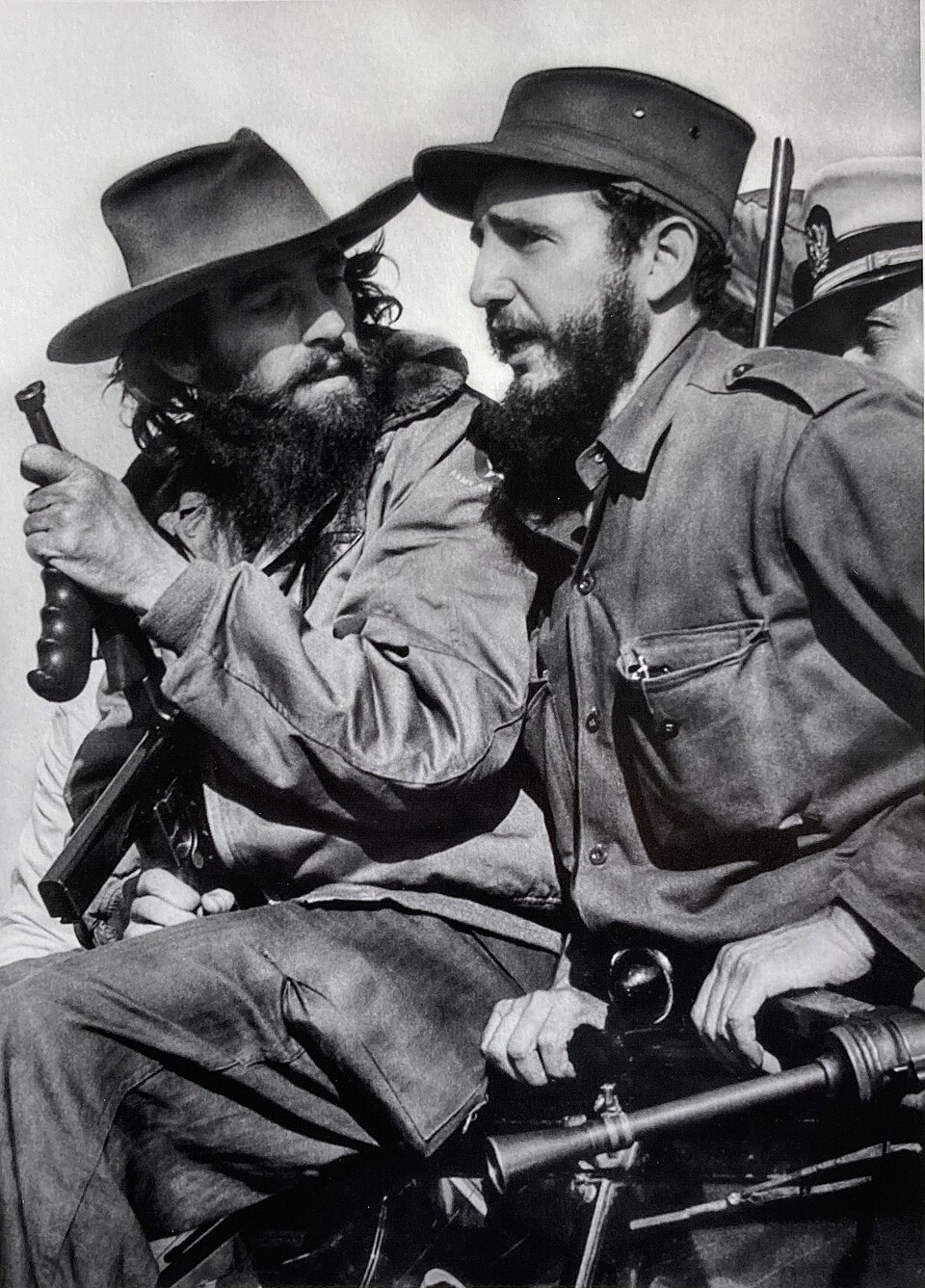
The classic case is of course Cuba. It’s the case that may have cost Nixon the election in 1960, and it’s the case that inspired Kennedy to create the U.S. Agency for International Development in the first place.
In Cuba in those days, a small and very powerful group (elite, oligarchy, etc.) led by the country’s president Fulgencio Batista, in league with several powerful U.S. corporations, and supported by the U.S. Government, reaped enormous profits for themselves while leaving a pittance for the working population, particularly in rural areas. Batista famously received a gold-plated telephone as a “gift” from an American telephone company. The gift was in thanks for Batista’s having lifted price controls on telephone rates in Cuba.
Those reaping the profits in Cuba did so by controlling the levers of government, which is to say that they manipulated the country’s institutions, such as telephone rates, to maintain poverty wages and to assure their income streams. Development would have involved the transformation of those institutions to the immediate disadvantage of those in power. Had development assistance been offered, other things being equal, it seems likely the Cuban Government, encouraged by their American corporate partners, would have declined to accept it.
But suppose other things had not been equal.
It is true that the American ambassador to Cuba repeatedly warned the Administration in Washington that matters in Cuba were deteriorating. We can imagine that at a meeting of the Cabinet of President Eisenhower, the Ambassador would have proposed the usual solutions: pressure on the Cuban Government to respect human rights, to negotiate with the opposition, to hold free elections. Also in the room would have been the Secretary of Defense, arguing for greater assistance to the Cuban police and military to maintain order against growing civil unrest. In reality the Cuban Government was using this assistance to kill thousands in the opposition. Next to speak would have been the Director of the Central Intelligence Agency, who would remind the room that nominal covert support was being provided to the Cuban opposition as a kind of insurance policy to curry favor in case they were ultimately prevailed. Some in the room would have been horrified: Was there a chance that Batista would be overthrown? Was the situation indeed that bad?
The Director of the CIA would then have reassured the room that significantly greater support was being provided by the CIA to the Batista regime itself. This included help to establish and to perfect the techniques of the Bureau for the Repression of Communism in Cuba. At this point the Ambassador might have interjected, “Don’t forget that in 1955, the BRAC fired upon students participating in a public demonstration against Batista. Besides killing people, it only served to fuel the fire of opposition.”
At this point, shaking his head in frustration, President Eisenhower would have turned, hypothetically speaking, to the Administrator of USAID — remember, this is hypothetical because USAID wasn’t formed until 1961 under the next president, Kennedy. Eisenhower would have asked, “What does USAID think?”
“Well,” would have said the USAID Administrator, “Cuba clearly fits the profile of a country in need of development — high rates of poverty and a repressive, highly corrupt government that seems bent on enriching itself rather than helping its own people. The Ambassador is right that the situation is now getting out of hand. But with all due respect to the Secretary of Defense and the Director of the CIA, I don’t think supporting Batista’s continued repression and violence against his own people will do anything more than to delay the inevitable. And if Batista is overthrown, that will most likely be disastrous for the United States.” In the room there would have been silence as everyone waited to hear Eisenhower’s response. Quietly, he would have asked for a clarification: “What consequences?”
“Nationalization of American assets in Cuba. Closer ties to the Soviet Union, possibly affording them a base for their nuclear weapons. That’s just 90 miles from Florida.”
Eisenhower would have rendered his decision, though we can imagine that his number 2, Richard Nixon, might have argued strongly against it, perceiving that collaborating with the Batista opposition would play into the hands of the communists, though it might have depended more on Nixon’s calculation as to how this might impact the upcoming U.S. election in 1960. We’ll assume here that Eisenhower gave the USAID Administrator the green light.
The American Ambassador would then have returned quickly to Havana, meeting with Batista to explain what was about to happen, warning that if Batista refused then the United States would not protect him, and might even side with Castro. Fairly swiftly thereafter, Batista would have resigned and fled the country, holding on to as much of his accumulated wealth as possible, possibly realizing he’s lucky still to be alive.
Meanwhile, the U.S. Secretary of Commerce would have convened the key American corporate interests in Cuba, advising them of the consequences of failure to cooperate with USAID, including the risk of public exposure of working conditions on their plantations and in their factories. One way or another, the environment in which they were currently operating was about to change. Better that they collaborate to craft a development assistance compact that might allow them to continue doing business in Cuba.
And so a USAID team would have been dispatched. At the airport, waiting to receive them with a promise of full cooperation, would have been the new President of Cuba. As the USAID team dispersed to meet with their counterparts within the various ministries of the Cuban Government, the director of the USAID team would likely have headed out to a remote corner of Cuba to hold a very important meeting with the leadership of the influential 26th of July Movement, especially with a young lawyer and former student activist hiding in the Cuban jungle, Fidel Castro. The offer to Castro would have been full participation in the negotiation of a development assistance compact, in return for a cessation of hostilities, backed publicly by Eisenhower himself.
It being the late 1950s, we can only wonder whether Castro and his colleagues would have accepted the offer. I suspect he would have said yes, and the repercussions worldwide would have been enormous.
This article was originally published on Jeffrey Cochrane substack
The views expressed in this piece are those of the author and do not necessarily represent the position of the Alliance 4 American Leadership (A4AL) alone. Alliance 4 American Leadership would like to acknowledge the many generous supporters who make our work possible.





Stay Updated
Become a member to learn about our impact, events, and how to get involved.