Soft Power Summer 2026

Join Us in Washington DC on June 24 and 25!

No matter the season, A4AL keeps fighting for foreign aid, including restoring USAID. Foreign aid has many benefits both abroad and here at home, from saving lives to boosting our own economy, but one that often goes overlooked is foreign aid’s role in maintaining American security through soft power on the global stage.
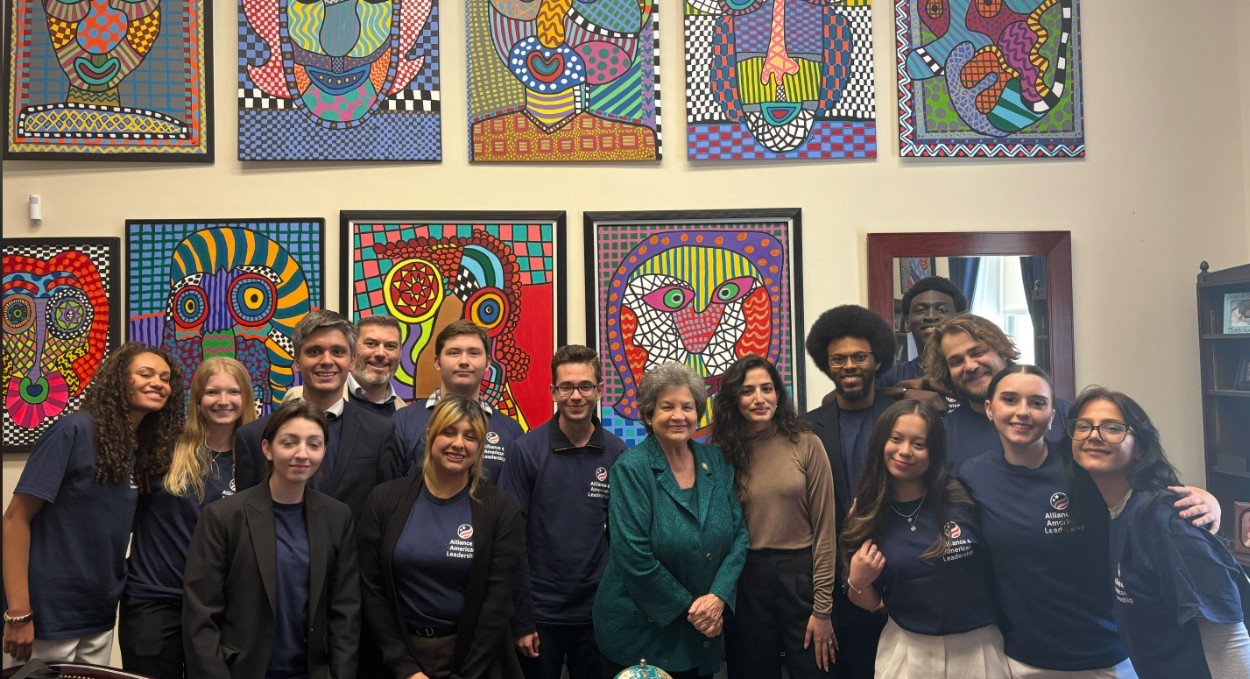
That’s why Alliance is having a #SoftPowerSummer, and we want you to be a part of it.

Join us on the Hill in Washington, DC this June 24th and 25th and speak with your representatives about why American investment in foreign aid is important. You don't need to be a policy expert. A member of our staff will be in every meeting to lead the discussion. You just need to show up, wear your A4AL shirt, and share why you care about international assistance. By taking part, you’ll be helping to build a safer, better world and a stronger United States.

What is it?

Soft power summer is a two-day advocacy event where A4AL and volunteers will join coordinated meetings across Capitol Hill in small groups, engaging with congressional offices about why investment in global development matters and how Congress can support effective international assistance. DC residents are welcome and encouraged to attend! You will have the opportunity to join meetings with constituents from across the country.

When is it?

Wednesday, June 24 to Thursday June 25 (see schedule below). June 25th is our main Hill Day. If you can only join one day, try to come on June 25th.

Why should I join?

There are many reasons to advocate for foreign aid. Until the closure of USAID in 2025, foreign aid boosted the U.S. economy, helped keep our country safe, countered global influence from China and other adversaries, and saved lives—more than 4 million lives per year—all while costing the average taxpayer $36 a year. Speaking in person with your representatives is one of the best way to get your voice heard and help bring back the United States to its right place on the global stage.

How do I join?

Simply complete this form and a member of A4AL will get in touch with you shortly.

Where can I find more information?

We’re so glad you asked! Here is more information about our talking points, dress code, and our schedule.

Hill Day Schedule

Day One: Wednesday, June 24

9:00–10:00 am: Morning Briefing
Dirksen Senate Office Building (50 Constitution Ave NE Washington, D.C.) Please enter through the Visitor Entrance at the corner of 1st Street NE and C Street NE, and meet inside. We will go over talking points, distribute materials for your meetings, and connect you with your A4AL staff lead for the day! We will have a staff member at the corner of 1st and C directing you to the entrance.

10:00 am–4:00 pm: Meetings with Members and Staff
You'll be in groups of 3–4 with an experienced A4AL staffer leading each meeting. Most meetings run 15–20 minutes. You will have about 6 meetings throughout the day. No preparation is required. We'll review everything together in the morning briefing.

Day Two: Thursday, June 25

9:00–10:00 am: Morning Briefing
Dirksen Senate Office Building (50 Constitution Ave NE Washington, D.C.) Please enter through the Visitor Entrance at the corner of 1st Street NE and C Street NE, and meet inside. There, we will go through talking points, distribute materials for your meetings, and connect you with your A4AL staff lead for the day!


10:00 am–4:00 pm Meetings with Members and Staff
You'll be in groups of 3–4 with an experienced A4AL staffer leading each meeting. Most meetings run 15–20 minutes. You will have 4-6 meetings throughout the day.

4:30 pm Group Photo
We will meet in front of the Capitol for a group photo.


5:30–7:30 pm:A4AL Reception Featuring Congresswoman Delia Ramírez (D-IL)
Meet at the Wet Dog Tavern (2100 Vermont Ave NW, Washington, DC 20001) to close out our day.

Dress Code

Business casual. Everyone will receive an A4AL t-shirt, to wear in Hill meetings. You may choose to pair your t-shirt with a suit jacket or other professional attire. Jackets are not required.

Our Talking Points - The American Case for International Assistance

1. Tell your story. Your personal perspective is the most powerful part of any meeting with Congress. Are you a former USAID employee? Explain the work you did and what stopped. Do you have family or friends abroad that benefited from American assistance? Share their experience. Are you a student who believes America should continue helping vulnerable communities facing hunger, disease, and humanitarian crises? Are you a person of faith who believes in helping others? Share something personal. When you show real passion, you demonstrate that this is an issue that impacts your vote. That matters.

Congressional offices remember authentic stories far more than statistics. When you speak personally about why this issue matters to you, you demonstrate that it matters to voters.

Note: You do not need to cover all the talking points below; you are welcome to share additional points. While A4AL advocates broadly for humanitarian aid and global development, feel free to focus your meeting on the programs you know best or care most about.

2. International assistance boosts America's economy. Most foreign aid is spent on American-grown food, American-made products, and U.S. based industry. USAID was historically the largest single buyer of U.S. agricultural commodities, purchasing roughly $2 billion per year through Food for Peace. See how foreign assistance helps your state at: https://www.usaidstopwork.com/usaid-state-by-state

3. International assistance keeps America safe. Foreign aid prevents wars by reducing instability, lowering conflict risk, and strengthening societies vulnerable to extremism and state failure. As former Secretary of Defense Gen. James Mattis put it, "If you don't fund the State Department fully, then I need to buy more ammunition."  

4. International assistance counters adversaries. Aid counters our adversaries by giving partner countries an American alternative to Chinese influence and coercive financing. As China expands efforts such as the Belt and Road initiative, American engagement remains a critical tool of strategic competition on the global stage.  

5. International assistance saves lives. Over the last 20 years, USAID saved an estimated 90 million lives through famine relief, public health, and other lifesaving programs. Foreign assistance embodies American values and helps make our country respected on the world stage. 

6. International assistance is accountable. International assistance accounts for less than 1% of the federal budget and is subject to extensive oversight and auditing requirements. The average taxpayer paid about $36 a year to fund USAID to save more than four million lives annually.