

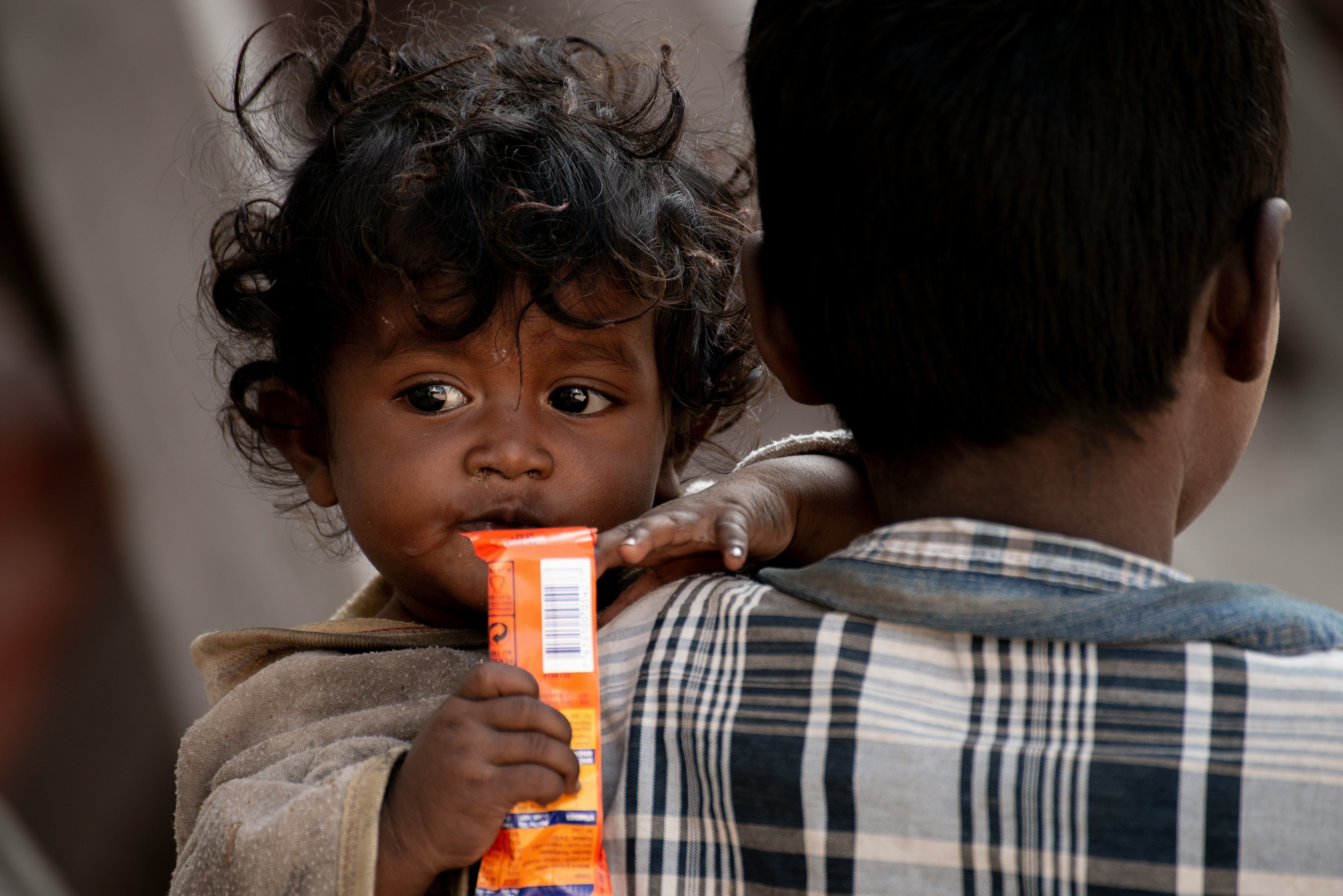




Georgia-grown peanuts enabled a company called Mana Nutrition to save the lives of more than eight million people facing severe acute malnutrition globally since 2010. But the sudden dismantling of the U.S. Agency for International Development (USAID) last year disrupted the system that distributed Mana’s lifesaving peanut pastes to malnourished children around the world. When Mana’s USAID contracts were canceled, access to its lifesaving pastes for more than 300,000 children was instantly put at risk.
The effects of USAID’s dismantling went far beyond only Mana Nutrition. In March 2025, UNICEF wrote that without USAID, more than 2.4 million children suffering from severe malnutrition could go without life-saving ready-to-use therapeutic foods (RUTF) for the remainder of the year. This undoubtedly contributed to the estimated 700,000 people who have already died due to USAID’s cuts, primarily children.
Mana, an organization based in rural Georgia striving to fight global hunger, manufactures nutrient-dense RUTF in the form of shelf-stable pouches made primarily of peanuts and milk. Mana is capable of producing 500,000 pounds of product per day, enough to feed 10 million children annually, using two million pounds of Georgia peanuts.
These paste packets are primarily used to treat children suffering from severe acute malnutrition, a condition that impacts the lives of nearly twenty million children every year and drives up child mortality rates. RUTF has been called a “wonder food,” and the average course of treatment to save a child from dying of malnutrition is about six weeks.
However, the process of distributing these lifesaving pastes to children is multifaceted, as reported by The Atlantic.
Months in advance of distribution, UNICEF and the United Nations World Food Programme would forecast the amount of RUTF required abroad based on the needs of affected populations. Wars, famine, and natural disasters all make children more vulnerable to malnutrition. USAID, a major purchaser of RUTF, then used to hire Mana and other U.S. companies to manufacture RUTF, while paying shipping companies to move it overseas. The UN was often involved in delivery, and organizations like Doctors Without Borders distributed RUTF shipments to families in need.
The collapse of USAID in early 2025 broke every part of that system. In October 2024, USAID had agreed to buy more than 1 million boxes of RUTF, enough to treat 1 million children. Distribution to ten different countries was to begin as early as March. But on April 4, 2025, Mana learned through an email that the plans to distribute the already-manufactured packets were to be halted, effectively canceling all of Mana’s USAID contracts. While contracts were subsequently reinstated, the reinstated contracts only honored old orders they were in the middle of fulfilling, not new or future orders.
Moreover, separate contracts with the shipping companies were not reinstated at all. As a result, distribution and shipment of RUTF was impossible, and Mana, which was only responsible for manufacturing the RUTF, was forced to hold large stockpiles amounting to nearly 600,000 cases in their warehouses—worth upwards of 50 million dollars. Without its main distributor, Mana temporarily went bankrupt, as 95% of its funding had been derived from government contracts.
These disruptions also impacted the people who relied on RUTF. Hellen Etiman, a mother from Kenya, had begun using RUTF to treat her son suffering from severe acute malnutrition, and believed that he would make a full recovery, according to Reuters. But when the local health facility that treated her son ran out of supplies, her son relapsed and the family had “to rely on wild fruit foraged in the barren plains of Turkana county” to care for him. At the time of Reuters’ visit, four-year-old Peter weighed only 25 pounds. Reuters journalists also visited the health facility, eyeing largely empty shelves and a slow recovery to normal operations.
USAID was responsible for over half the annual orders of RUTF before the agency was dismantled a year and a half ago. But an administrative switch from humanitarian aid to “humanitarian trade,” and the absorption of USAID by the Bureau of Disaster and Humanitarian Response, has cut funding to around an eighth of what it used to be.
For that reason, we at the Alliance for American Leadership are fighting to bring back programs formerly funded by USAID. Through grassroots advocacy and small-dollar support, we are urging Congress to reinstate U.S. funding for humanitarian and development aid.
Every week we are visiting Congressional offices to put the restoration of foreign assistance on the agenda. We are making phone calls for candidates who support our mission, and we are telling everyone we know that foreign assistance is really foreign investment: and that it made the United States safer and stronger.
Foreign assistance made up less than one percent of the federal budget even before USAID’s dismantling, but it had massive impacts. Mana shows how a small amount of funding can reach millions of children across the globe while putting money into American businesses. If you believe the U.S. should reclaim its spot as a humanitarian leader and renew its commitment to ending child malnutrition, please support our work with a donation.
The Alliance for American Leadership is a grassroots movement fighting to restore USAID. We’ve placed organizers in every congressional district and on over 150 college campuses. No corporation or billionaire funds our work, only individual Americans who believe our country should do the right thing.
Sign our petition calling on Congress to reinvest in U.S. humanitarian aid.
Apply to join our Advisory Board, volunteer network, or internship program.
The views expressed in this piece are those of the author and do not necessarily represent the position of the Alliance 4 American Leadership (A4AL) alone. Alliance 4 American Leadership would like to acknowledge the many generous supporters who make our work possible.


Stay Updated
Become a member to learn about our impact, events, and how to get involved.