




The question is not whether the United States could afford foreign aid. The question is whether it can afford the crises that await the world in its absence.
On January 24th, 2025, four days into the second Trump administration, the State Department issued a blanket stop-work order for the U.S. Agency for International Development (USAID). Over the following weeks, the Elon Musk-led Department of Government Efficiency dismantled the agency’s operations, halting billions in aid and closing projects worldwide. By March, officials had cancelled 83 percent of USAID programs.
In one particular region, West Africa and the Sahel, the Center for Global Development estimated that in May 2025, the cancellations cancelled $852 million in funding, roughly 29.5 percent of all American aid to the region. These abrupt cuts created a resource vacuum quickly filled by growing regional militant groups, transforming one quick decision on paper into a massive international security liability.
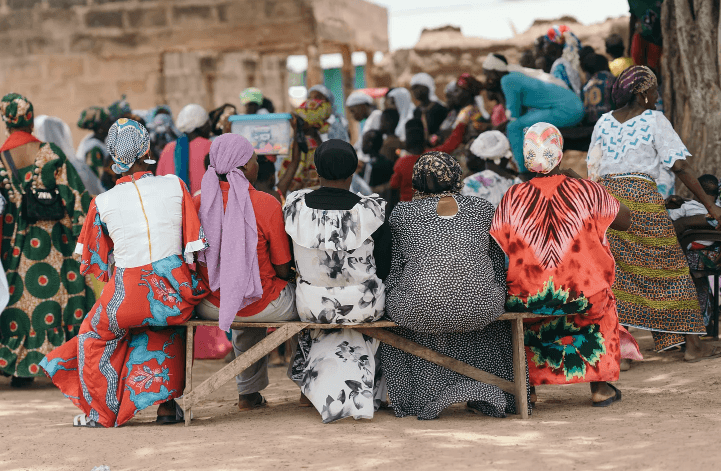
In 2021, USAID’s Office of Transition Initiatives had launched the Littorals Regional Initiative, a program designed to help communities in the West African nations of Ghana, Togo, and Benin withstand the increasing pressures of violent extremism. The program used grants targeting local organizations in the most vulnerable border districts. As documented by USAID’s Inspector General, the agency’s Resilience in the Sahel Enhanced program, a multi-year development initiative designed to combat poverty, food insecurity, and climate vulnerability in the West African Sahel, received $348 million beginning in 2014; its successor was planned at $446.3 million through 2023, all of it directed at Burkina Faso and Niger. These programs and others were shuttered, leaving thousands without the resources to survive or just go to school. In Nigeria, only 38 percent of the humanitarian education sector’s required funding had been released as of December 2025, and school closures in conflict-affected areas followed. The resulting surge in acute hunger has pushed young people into desperation.
Groups long seen as limited local insurgencies have evolved into regional actors capable of intricate modern urban warfare. Attacks by Jama’at Nusrat al-Islam wal-Muslimin (JNIM), the most prolific group, have grown more widespread and violent as they spread across West Africa, aiming to topple governments and wage Jihad. The Africa Center for Strategic Studies recorded 23,968 fatalities linked to militant Islamist groups across Africa in 2025, 9,826 of them in the Sahel, where JNIM alone is linked to 78 percent of the violence. Millions of Burkinabè have been displaced.
JNIM’s ambitions are no longer confined to the Sahel. In Benin, militant Islamist-linked fatalities reached 305 last year, the deadliest on record and a 76 percent increase. JNIM has even appointed an emir for the country, shining light on their future plans. In Nigeria, the group announced a new brigade in June 2025 and released a video in July declaring its intent to establish itself in the nation, which is Africa’s most populous. Four months later, it claimed its first attack there, in the borderlands where Kwara and Niger states meet Benin.
When the economic opportunities that USAID funded leave a region, the youth turn toward these armed groups, which entice them with the spoils of war and a chance to escape poverty. The sudden beheading of USAID only exacerbated this problem. A May 2026 study in Science describes this mechanism perfectly. An abrupt cut operates “mostly through a sudden and massive decrease in the opportunity costs” of fighting, while the rents these armed groups compete over “may remain relatively unaffected in the short run.”
Mali shows how quickly the cuts affected the situation on the ground. The UN reports that areas where families received reduced rations have seen a 64 percent surge in crisis-level hunger since 2023. Communities that kept full rations saw a 34 percent decrease. WFP’s deputy regional director for West and Central Africa put it plainly: “As needs outpace funding, so too does the risk of young people falling into desperation.” Ultimately, by damaging the local economic safety net, these unprecedented cuts transform rampant hunger into a primary driver of conflict, pushing young people toward more violent solutions.
The correlation between aid cuts and increased violence is not just obvious to the naked eye but is now backed by data. Researchers found that the African regions most dependent on American aid saw roughly 12.3 percent more conflict events after the shutdown than regions that received little, along with 7.3 percent more battles and 6.8 percent more protests and riots. The study measures a continent, not recruitment in any one village, but where American aid had its deepest hold, violence rose fastest once it stopped.
The American stake in this is not abstract. General Dagvin Anderson, commander of United States Africa Command, testified before Congress in May that “the epicenter of global terrorism is in Africa” and that both the Islamic State and al-Qaida “share the will and intent to strike our homeland.” He described a command left with an intelligence black hole after a decade of withdrawals.
The obvious objection is that aid in the Sahel failed for a decade, which is why it was cut. But a closer look at what actually failed reveals a verdict on the military approach, not the development one. The Center for Global Development writes that “the wide-ranging counterterrorism and military efforts led by France (with support from the US) were not the answer, serving only to inflame local resentment and fuel the expansion of militant groups.” CGD warns that “abrupt and haphazard cuts to life-saving programs will only worsen existing cycles of violence and displacement.” The soldiers and the airstrikes inflamed the region; the food rations, the land restoration, and the local grants in the border districts are worth keeping.
This is where the work of the Alliance for American Leadership (A4AL) comes in. A4AL is fighting to increase U.S. investment in diplomacy and global development; embassies, health programs, food assistance, and stabilization work, not any one agency. And if there’s anything USAID showed us, it’s that a little money goes a long way: USAID’s budget in 2024 was just $21.7 billion, roughly 0.3 percent of federal spending. That is less than a single sustained counterterrorism deployment, the kind the United States may yet be forced to run in West Africa.
We know what the money buys, because it was already buying it. Land restoration in the Sahel generates up to $30 for every dollar spent, and since 2018 the World Food Programme and local communities rehabilitated 300,000 hectares, supporting more than four million people. This is the work that holds back the expanding Sahara, and it cannot proceed near an active conflict site. Violence in the Sahel is estimated to cut the land reachable for restoration from 27.9 million hectares to 14.1 million. The encroaching Sahara is making farmable land more scarce, exacerbating the humanitarian conflict.
Every year of fighting makes solutions more costly. The Littorals Regional Initiative was funding local organizations in exactly the border districts JNIM is now moving through. West Africa is now finding out what the alternative costs, and in time, so will everyone else.
A4AL believes it’s not too late to close the vacuum and resume the life-saving work that was being done in West Africa and elsewhere. Through grassroots advocacy and volunteer support, A4AL is urging Congress to reinstate foreign assistance programs. Show your support for foreign aid and stand against violence by making a contribution to A4AL today.
The views expressed in this piece are those of the author and do not necessarily represent the position of the Alliance 4 American Leadership (A4AL) alone. Alliance 4 American Leadership would like to acknowledge the many generous supporters who make our work possible.



Stay Updated
Become a member to learn about our impact, events, and how to get involved.