




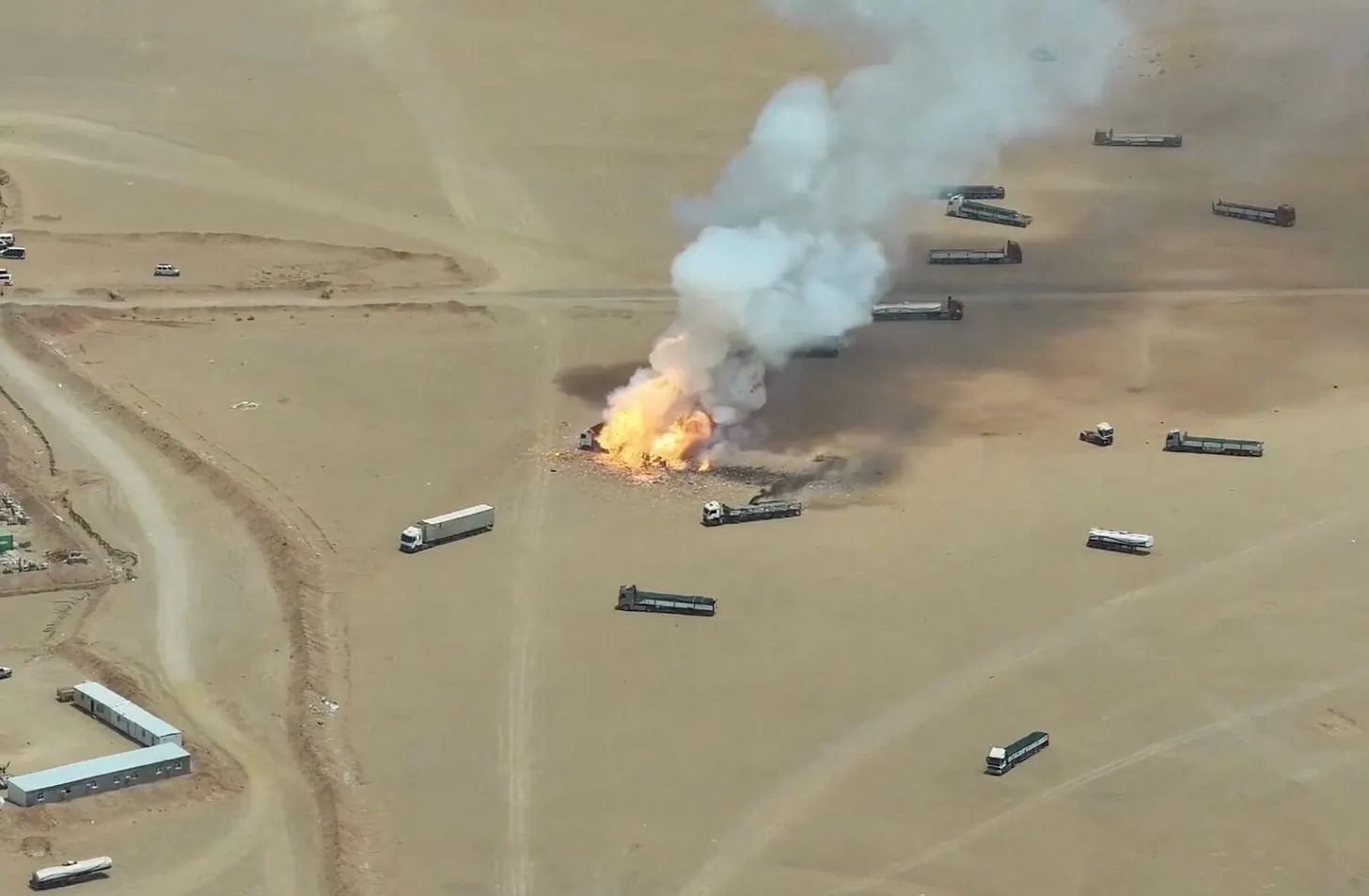
Ebola is spreading in the Democratic Republic of the Congo (DRC), and the international response is struggling to keep up.
As of August 23, 5,515 cases had been confirmed, and 2,642 people had died. According to government reporting, 51 new cases were detected in Ituri and North Kivu provinces.
The staggering figures make this the deadliest Ebola outbreak ever faced by the DRC and put it on track to surpass the death toll of the worst outbreak in history—the 2014 West Africa Ebola epidemic that claimed 11,000 lives.
The workers fighting Ebola are being affected, too. According to the WHO, 160 healthcare workers have become sick, and about 45 have died. The case fatality rate has more than doubled in the last three months, and now the virus kills almost half of those who contract it.
Contact tracing has improved, but responders continue to face formidable obstacles, including violent conflict, displacement, and attacks on medical facilities.
The rare viral strain causing this outbreak, Bundibugyo ebolavirus, has no approved vaccine, but early trial data suggests that Ervebo, the vaccine licensed for Zaire ebolavirus, may offer some protection. Health workers and experts are calling for more vaccine doses.
Pope Leo appealed for broader global cooperation to combat the crisis. The World Health Organization (WHO) designated it a Public Health Emergency of International Concern, its highest level of alert. And still, the United States watches from afar.
But it hasn’t always watched.
Following the disastrous 2014 Ebola outbreak, the United States participated in a coordinated response in West Africa. US humanitarian workers treated the sick, conducted contact tracing, educated communities about sanitation and body disposal, and tracked cross-border spread. Their efforts kept the epidemic from exploding into a worldwide catastrophe, including here in the United States.
The containment of the 2014 West Africa Ebola outbreak showed what can be accomplished when the world comes together to confront a health threat.
But this time, the US has played a far smaller role. And the price is being paid in lives.
Historically, the United States Agency for International Development (USAID) served as a critical pillar of America’s global health and humanitarian presence. USAID had been the main agency supporting US responses to Ebola abroad. When the agency was dismantled last year, so was much of the network of personnel and expertise that had enabled the United States to respond quickly to sudden crises. Many local partner organizations were forced to lay off staff and scale back operations, disruptions that still reverberate today. At the same time, U.S. withdrawal from the WHO left gaping holes in funding.
And now, as another deadly Ebola crisis unfolds, the international community is struggling to keep pace.
Transmission has been interrupted in neighboring Uganda and several health zones in the DRC, which the WHO cautiously pointed to as evidence that containment could be successful. However, WHO officials also said the response needs to be two or three times larger if it hopes to contain the outbreak.
As cases multiply, American withdrawal from the humanitarian sphere begs the question: What did we learn from the last major Ebola epidemic?
We learned that international assistance works, and that waiting costs lives.
Foreign assistance isn’t an abstract line in the federal budget. It’s what gives health workers the resources to find cases, protect communities, and stop outbreaks before they spread.
That’s why we at the Alliance for American Leadership (A4AL) wrote and signed the Two Penny Pledge, calling on America to restore its commitment to foreign assistance. Most Americans believe the United States spends roughly a quarter of its budget on foreign aid. In reality, foreign aid accounts for less than 1% of the federal budget. A4AL is calling for 2% of our budget to be dedicated to foreign aid programs, bringing funding back to its level under the Reagan administration. We believe it’s not too late for America to reclaim its status as a leader in global health—especially when it comes to a disease that has been successfully contained before. If you agree, join us in defending foreign assistance by signing our Two Penny Pledge today.
And if you’re able, consider supporting A4AL with a donation. Every contribution helps us reach more Americans, mobilize students across college campuses, and urge members of Congress to protect the funding needed to fight Ebola and other preventable diseases around the world.
We beat Ebola before. We can help beat it again. But only if we choose to act.
The views expressed in this piece are those of the author and do not necessarily represent the position of the Alliance 4 American Leadership (A4AL) alone. Alliance 4 American Leadership would like to acknowledge the many generous supporters who make our work possible.


Stay Updated
Become a member to learn about our impact, events, and how to get involved.