




It was clear to many when cuts were made to USAID, an organization responsible for saving roughly 92 million lives in two decades, that lives were going to be lost. However, some chose not to look beyond the numbers to individual cases. For example, not many recognize the name Suza Kenyaba, a 5-year-old Congolese girl who died as malaria ravaged her body. Life-saving medicine that could've saved Suza was in a warehouse just 7 miles away, but wasn't distributed due to aid freezes. Another child and aspiring soccer player, Mohammed Hashim, died of starvation in Myanmar after the United States cut food aid to the region. Two weeks later, U.S. Secretary of State Marco Rubio declared before Congress that “No one had died” due to foreign aid cuts, and that “No children are dying on my watch.” Mohammed Hashim’s father labeled these claims as blatant lies.
If these atrocities won’t motivate U.S. policymakers to reinstate aid that has historically accounted for less than 1% of the federal budget, I know something else that might: foreign competition. In 2025, China officially overtook the United States, the European Union, and even the African Union when it came to influence on the African continent. Additionally, for the first time in over 10 years, China is now seen as a more positive influence on the international arena as a whole than the United States. Going further, according to the U.S. Government Accountability Office, China has significantly outpaced the United States in foreign investment and assistance. From 2013 to 2022, China has spent over 679 billion dollars in nearly 150 countries, and in doing so, it has “expanded its influence globally, posing significant challenges to the United States’ economic, political, and security interests.” But China isn’t the only nation seeking to fill the gaping hole left by the United States; adversarial actors such as Russia, as well as allies such as France and Germany, are beginning to spread their influence where the United States no longer does so. The United States of America is retreating on the world stage, just as Beijing and others advance.
The United States’ most recent attempt to bolster international security came on the 28th of February with Operation Epic Fury, a military operation done in conjunction with the Israeli Defence Forces. So far, the Council for Strategic and International Studies estimates that the operation on Day 12 has cost the United States $16.5 billion from its start through March 12th. That means that in 12 days, the United States has used almost one-fifth of its 2024 foreign assistance total (82 billion dollars – 1.2% of the 6.75 trillion dollar 2024 FY budget). As a result of the operation, the Strait of Hormuz has been effectively shut, blocking nearly 20% of the world’s oil supply. In Los Angeles County, where I attend university, gas prices have hit almost $8 a gallon and at the time of writing average around $5.50 a gallon. After observing the adverse effects of military action in Iran, President Donald Trump recently called for aid in securing the Strait. He wrote on Truth Social, “The Countries of the World that receive Oil through the Hormuz Strait must take care of that passage, and we will help — A LOT.” It is painfully clear that this current display of hard, militant power in the Middle East is harming both the purchasing power of American consumers and America’s global reputation, as nations such as South Korea, Germany, Australia, and Japan reject the President’s latest military aid request.
On the other hand, foreign aid, when structured correctly, has immense benefits that promote peace and domestic prosperity. It’s simple: foreign aid promotes peace, and peace saves people money. For example, for every $1.00 the US spends on international assistance to prevent conflict, it saves $16.00 on response costs. Recently, American representatives recognized the mistake they had made in cutting Food for Peace, a former USAID program that paid farmers for their surplus product, and sent it to regions abroad in need. As of February 3, the program was acquired by the United States Department of Agriculture and is now committed to “sending nearly 211,000 tons of U.S. agricultural goods to people in need in the Democratic Republic of the Congo, El Salvador, Ethiopia, Guatemala, Haiti, Kenya, and Rwanda.” Another at-risk department, the U.S. Trade and Development Agency (USTDA), consistently generates $85 worth of U.S.-manufactured goods and services for every $1 they spend on priority development projects. Moreover, since the agency was established, it has brought about $56 billion worth of U.S. exports, while supporting 300,000 American jobs. The results speak for themselves: saving thousands of lives abroad helps improve millions of lives at home.
In order to get U.S. foreign aid back on the table, advocates should argue on strategic grounds. I’m not saying that the moral arguments behind foreign aid don’t still hold true–they do–what I’m saying is that they are no longer politically persuasive. The benefits of overseas aid have several advantageous effects on the U.S. economy, consumers, and producers. Advocates should use these benefits to their advantage. If foreign assistance is to survive in Washington, it must be understood as calculated, not charitable.
The views expressed in this piece are those of the author and do not necessarily represent the position of the Alliance 4 American Leadership (A4AL) alone. Alliance 4 American Leadership would like to acknowledge the many generous supporters who make our work possible.
Recent Articles

Rep. Delia Ramirez Endorses A4AL's Two-Penny Pledge

Six Purely Selfish Reasons to Support USAID

The US-Iranian War: Implications for USAID and the Economy

Alliance for American Leadership Hill Day Press Conference
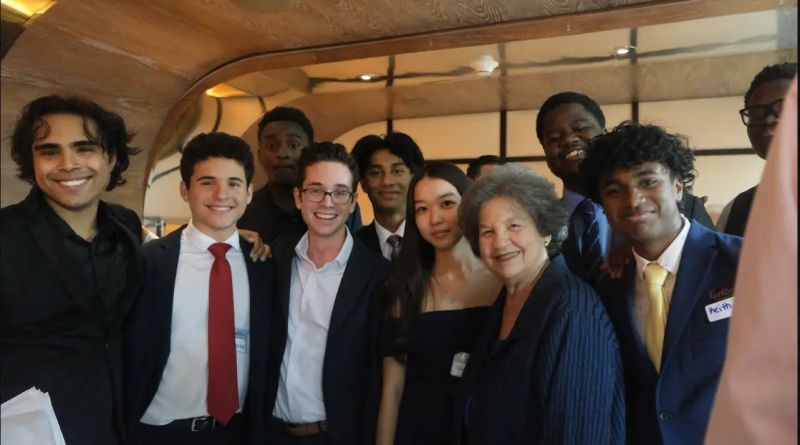
A4AL Endorses USAID Champion Representative Lois Frankel (D-FL 23)
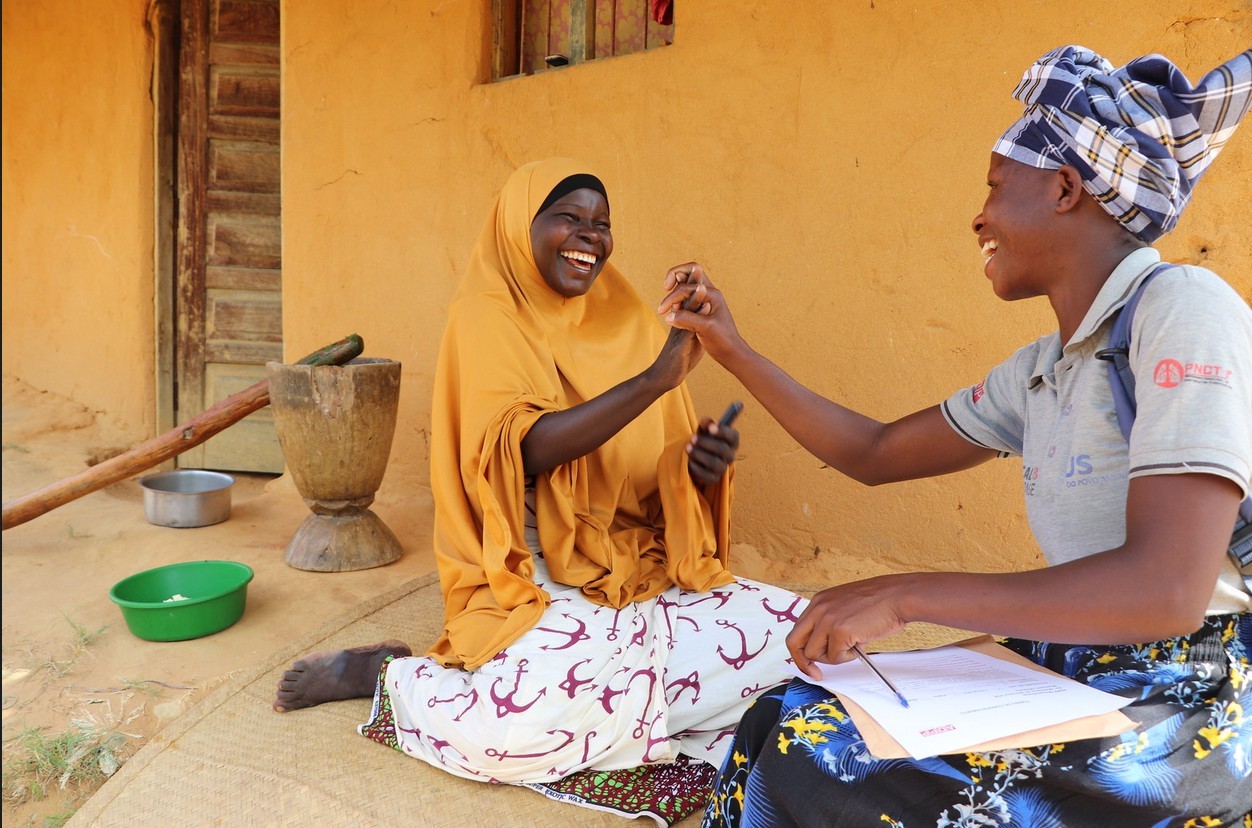
Did You Know That the United States Spends Less Than 1% of Its Budget on Foreign Aid?
Stay Updated
Become a member to learn about our impact, events, and how to get involved.